How to Prepare Your Child for Their First Visit to a Paediatric Dentist

Updated: 2 days ago
Founder & Lead Dental Surgeon, DenARTistry
One of the most common questions I hear from parents at our Bangsar clinic is, "When should I bring my toddler in for their first dental check-up?" Often, parents assume they should wait until their child has a full set of teeth or until they are old enough to sit perfectly still in the chair.
In reality, the global standard set by pediatric dental associations is much earlier: your child’s first dental visit should occur by their first birthday, or within six months of their first tooth erupting.
Bringing a one-year-old or an energetic toddler to the dentist might sound like a recipe for tears and tantrums. As a parent, it is completely natural to feel anxious about how your child will react to a clinical environment. However, this early milestone is not about drilling or complex procedures. It is entirely about establishing a positive foundation and adhering to the golden rule of healthcare: prevention is better than cure.
In my 25 years of practice, I have found that a successful first visit comes down to how well the child is prepared at home and the environment we create in the clinic. Here is a comprehensive guide to preparing your child—and yourself—for a stress-free first visit to a paediatric dentist in Kuala Lumpur.
Why Early Visits Matter: The Preventive Mindset
Waiting until a child is in pain to visit the dentist is a traumatic introduction to oral healthcare. By scheduling a baseline visit around age one, we accomplish three critical preventive goals:
Acclimatization: We introduce the child to the sights, sounds, and friendly faces of the dental clinic in a non-threatening, pain-free scenario. This eliminates the fear of the unknown.
Early Detection of Decay: "Baby bottle tooth decay" can develop rapidly as soon as the primary teeth emerge. We can spot the earliest, microscopic signs of demineralization and reverse it with simple fluoride varnishes before it becomes a painful cavity.
Parental Education: The first visit is largely for the parents. We discuss proper brushing techniques for tiny mouths, teething management, pacifier habits, and nutritional guidance to protect your child's developing teeth.
Step-by-Step Preparation: What to Do at Home
Your child looks to you for cues on how to react to new situations. If you project calm confidence, they are much more likely to feel safe.
1. Watch Your Vocabulary
Never use the dentist as a threat (e.g., "If you don't brush, the dentist will have to pull your tooth out!"). Avoid using negative, fear-inducing words like pain, hurt, needle, drill, or shot. Instead, reframe the experience using positive language. Tell your child we are going to "count their teeth," "tickle their gums," and "make sure their smile is strong."
2. Play "Pretend Dentist"
Toddlers learn through play. A few days before the appointment, practice a mock dental visit at home. Have your child recline on the sofa while you use a toothbrush or a small spoon to gently count their teeth. Then, swap roles and let them count your teeth or the teeth of their favorite stuffed animal. This makes the physical act of someone looking into their mouth feel familiar and routine.
3. Timing is Everything
Do not schedule a dental visit during your child’s usual nap time or right before a meal when they are likely to be cranky or hungry. Morning appointments are generally the most successful, as children are rested, fed, and cooperative.
4. Keep Explanations Simple and Brief
Do not over-explain the appointment days in advance; this only gives a toddler time to build up anxiety. Mention the visit casually the night before or the morning of the appointment, keeping the details light and positive.
What to Expect at DenARTistry: The "Kid Gloves" Approach
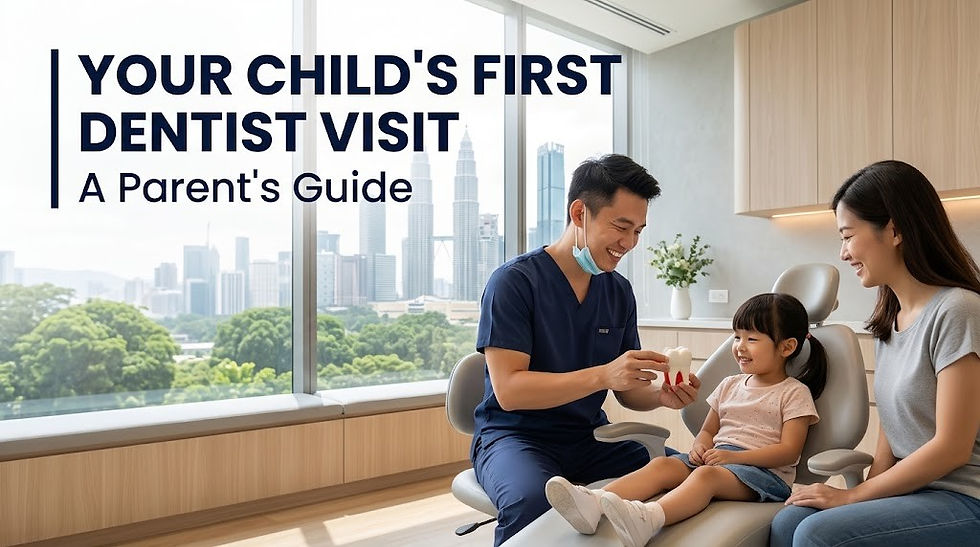
We have specifically designed the pediatric experience at our Bangsar Shopping Centre clinic to feel like a fun outing rather than a clinical procedure.
When you arrive, we take a "Tell, Show, Do" approach.
Tell: We explain exactly what we are going to do in kid-friendly terms (e.g., "This is Mr. Thirsty, he drinks the water in your mouth").
Show: We demonstrate the tool on their hand or a toy first.
Do: Once they are comfortable, we perform the quick examination.
No Gooey Impressions: For older toddlers or children needing an orthodontic evaluation, traditional gooey impression trays that cause gagging are a thing of the past. We use high-tech 3D intraoral scanners that capture a digital model of their teeth in seconds. Kids love watching their own teeth instantly appear on the computer screen.
Comfort First: We let kids wear cool sunglasses to block the bright clinical lights, allow them to sit on your lap during the exam if they feel safer, and always keep a stash of rewards to celebrate a job well done.
Establishing a 6-month preventive check-up routine from a young age ensures that the dental clinic becomes a familiar, friendly place. It protects their primary teeth (which serve as essential placeholders for adult teeth) and sets them up for a lifetime of confident, anxiety-free smiles.
Ready to schedule your child’s milestone visit?
Contact our friendly team at DenARTistry today at 017-756 0655 or email us at hello@denartistry.com to book a paediatric consultation. We look forward to guiding your child's smile journey with warmth and gentleness.
About the Author
With 25 years of clinical experience, Dr. Eugene is the founder and Lead Dental Surgeon of DenARTistry in Kuala Lumpur. Earning his Bachelor of Dental Surgery from The University of Adelaide in 1996, Dr. Eugene has built a legacy of trust, renowned for his family-friendly approach, gentle demeanor, and excellence in preventive and restorative dentistry. He focuses on patient-first, evidence-based care to help every generation—from toddlers to grandparents—live and smile with confidence.
Disclaimer: The information in this article is for educational purposes only and does not substitute professional medical advice. Always consult a qualified paediatric dentist or healthcare provider regarding any medical condition, diagnosis, or treatment plan.
Frequently Asked Questions (FAQs)
1. What happens if my toddler cries during their first dental visit?
Crying is a completely normal, age-appropriate reaction for a toddler experiencing a new environment. Do not feel embarrassed! Our team is highly experienced in working with young, anxious children. We work quickly and gently while they sit comfortably on your lap. Often, the crying stops the moment the quick examination is over, and we quickly pivot to positive reinforcement and rewards.
2. Why do we need to fix cavities in baby teeth if they are just going to fall out anyway?
Baby teeth are crucial for proper chewing, speech development, and holding the correct space in the jaw for permanent teeth. If a baby tooth decays and is lost prematurely, adjacent teeth will shift into the empty space, causing severe crowding and impactions for the adult teeth. Furthermore, an untreated cavity in a baby tooth can cause a painful dental abscess and damage the permanent tooth developing beneath it.
3. Are dental X-rays safe for young children?
Yes. At DenARTistry, we use advanced digital X-rays that emit extremely low doses of radiation—significantly less than traditional film X-rays. We only take X-rays when absolutely necessary for diagnostic purposes, such as checking for hidden decay between touching teeth or evaluating the development of adult teeth beneath the gums.
4. How much does a child's first dental check-up cost in Kuala Lumpur?
A child's first visit is typically very affordable because it focuses heavily on consultation, a visual examination, and acclimatization, rather than complex procedures. We provide a clear, transparent breakdown of consultation fees prior to your appointment. Investing in these early preventive visits saves families significant money by avoiding severe decay or complex pediatric treatments in the future.
5. How do I clean my baby’s teeth before they are old enough to spit out toothpaste?
Before teeth erupt, gently wipe your baby's gums with a clean, damp washcloth after feedings. As soon as the first tooth appears, use a soft-bristled infant toothbrush with a tiny "smear" (the size of a grain of rice) of fluoride toothpaste. This tiny amount is safe even if swallowed. We will demonstrate the best brushing angles and techniques during your first visit to make home care easier.

Comments